

ASD and Neurodiverse Student Inclusion
Fall 2020
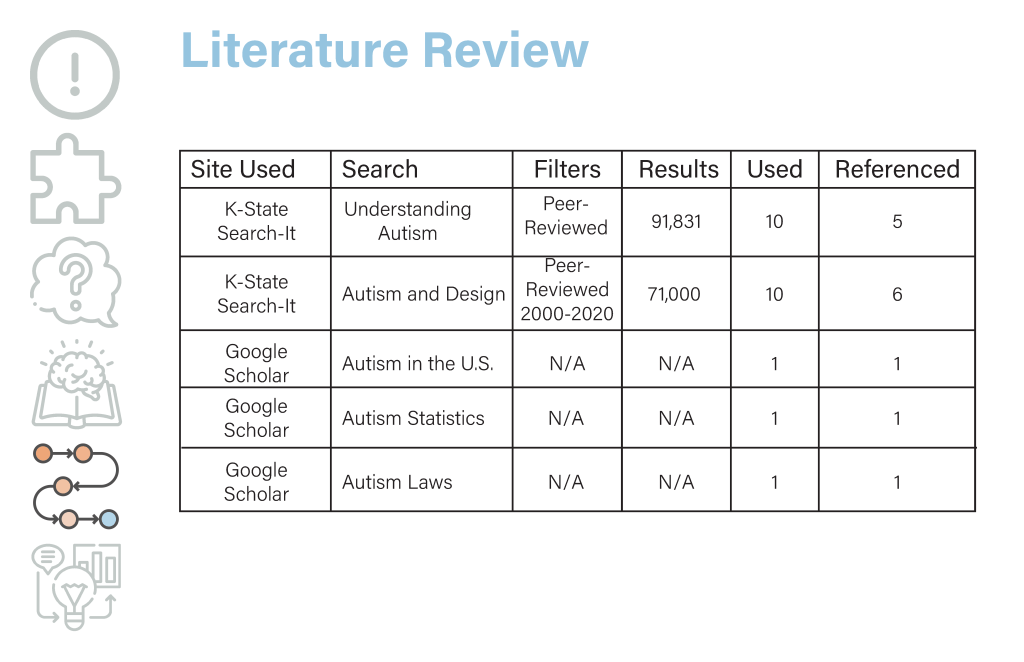
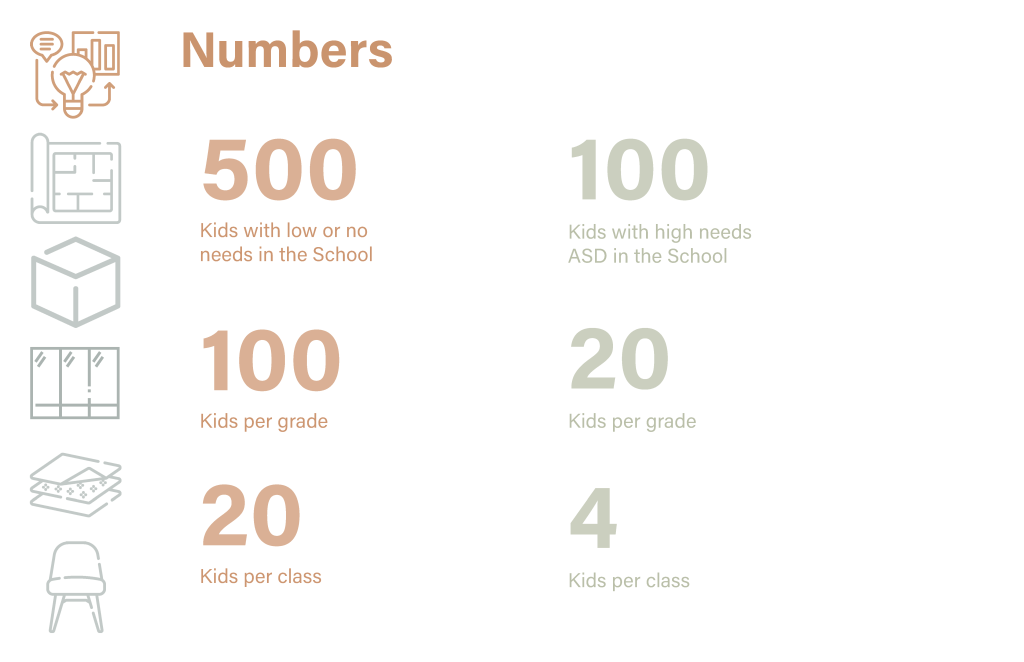
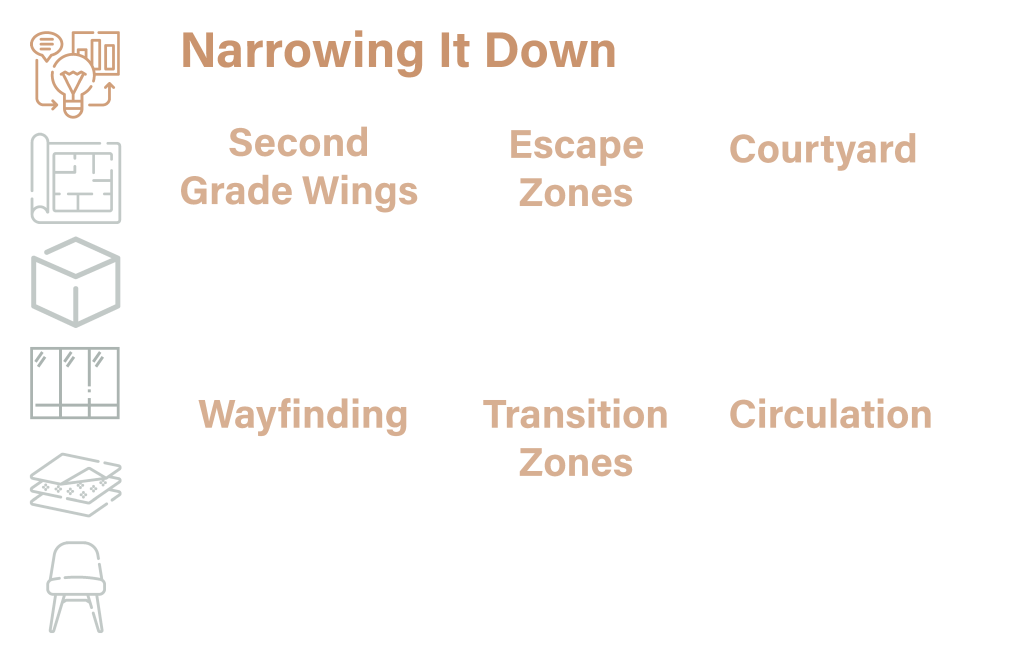
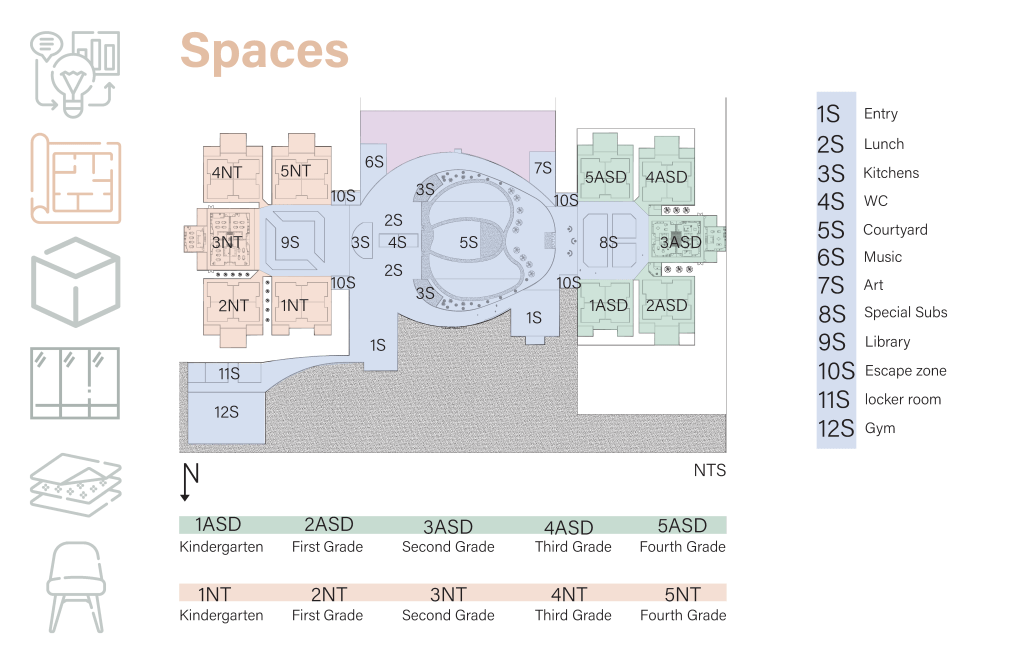
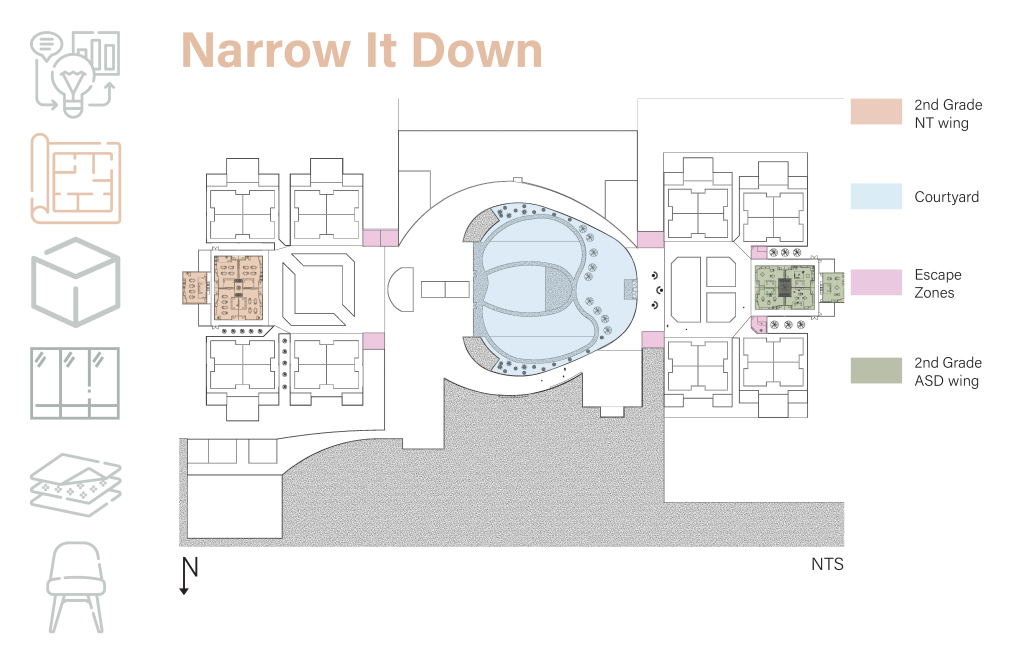
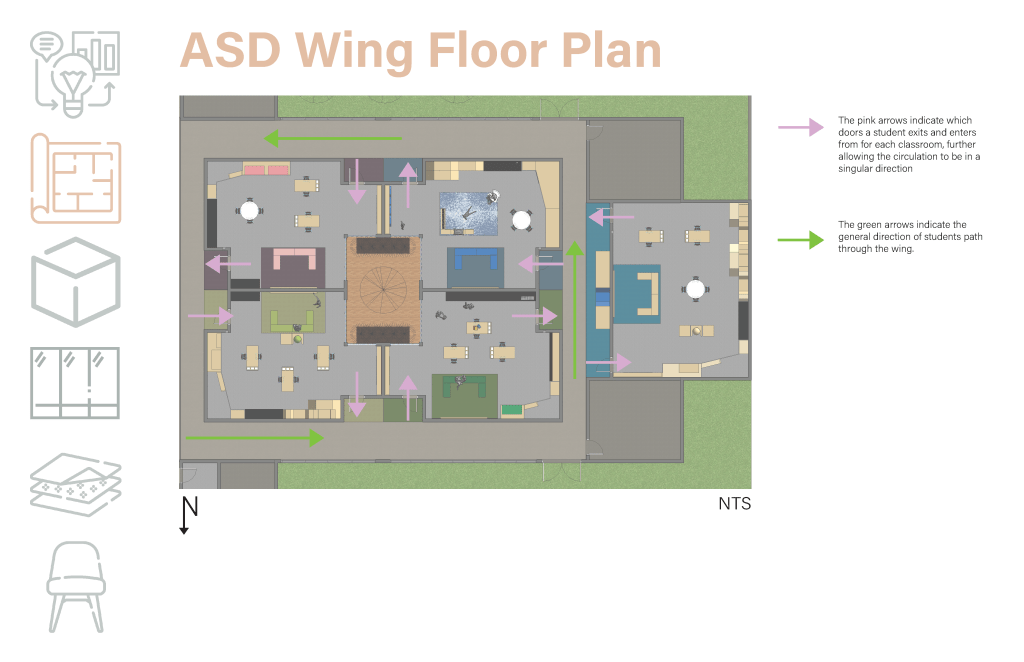
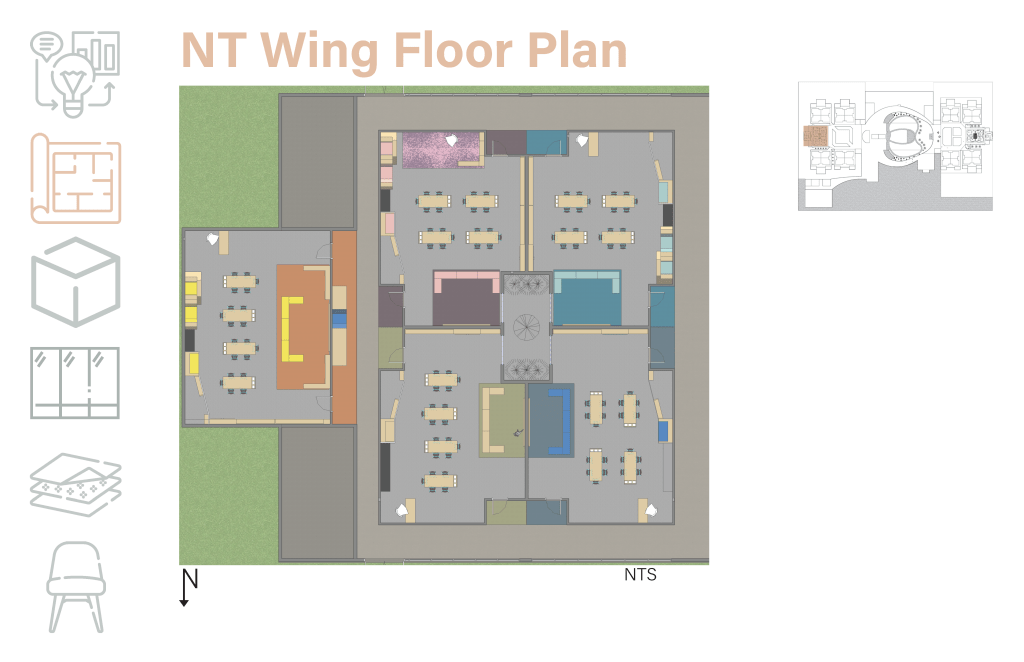
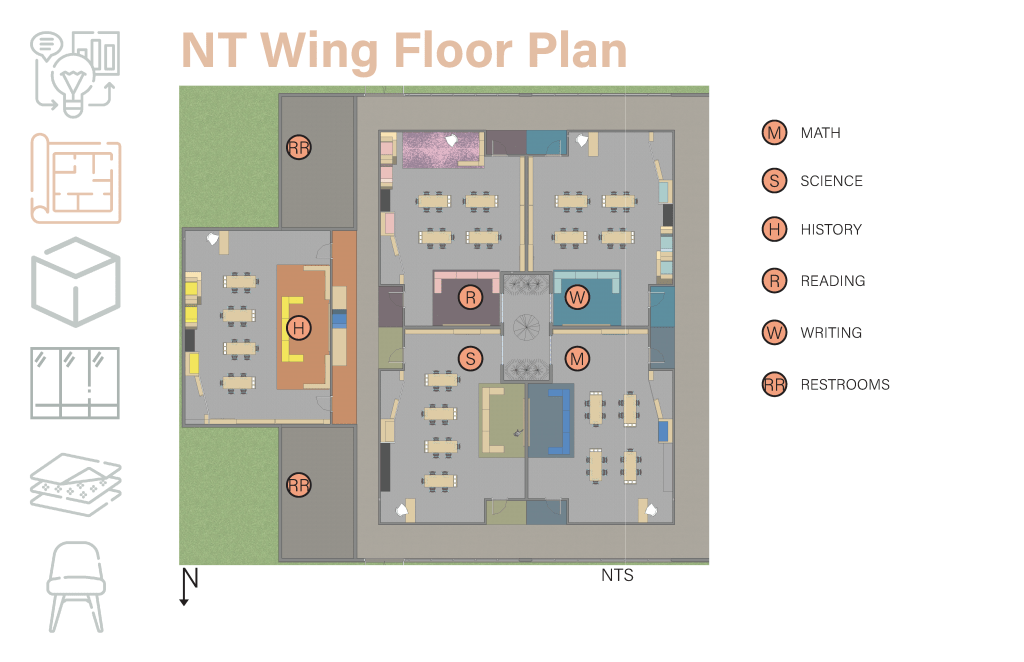
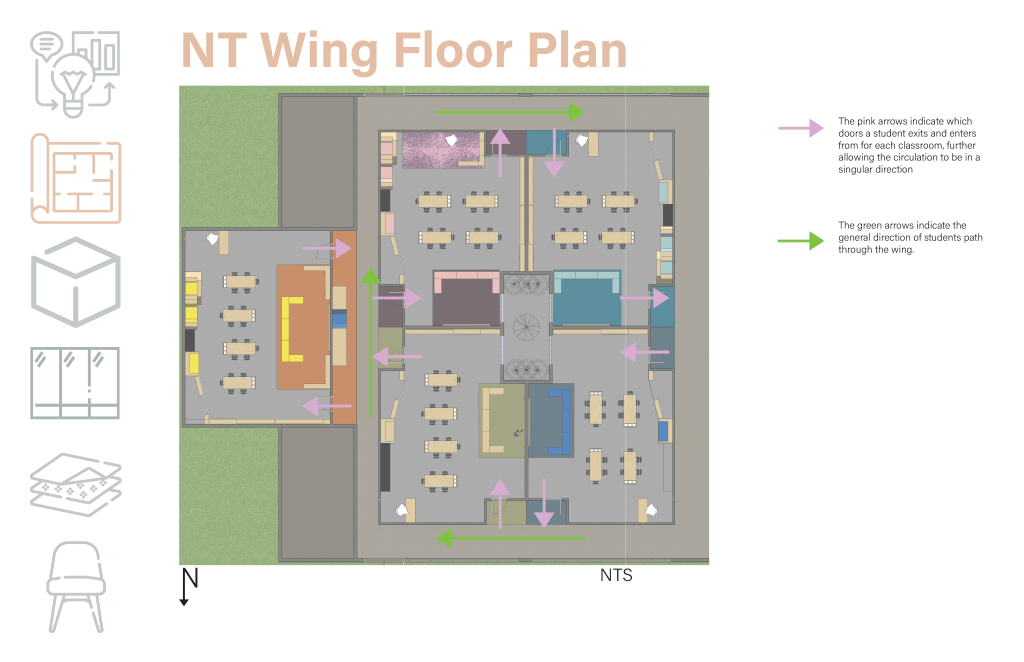
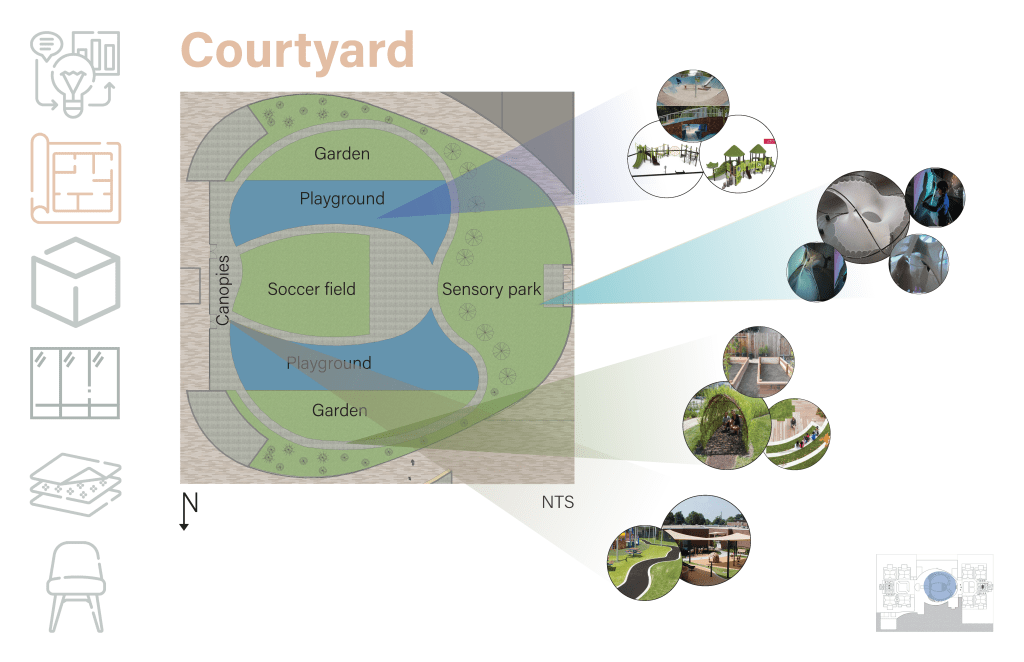
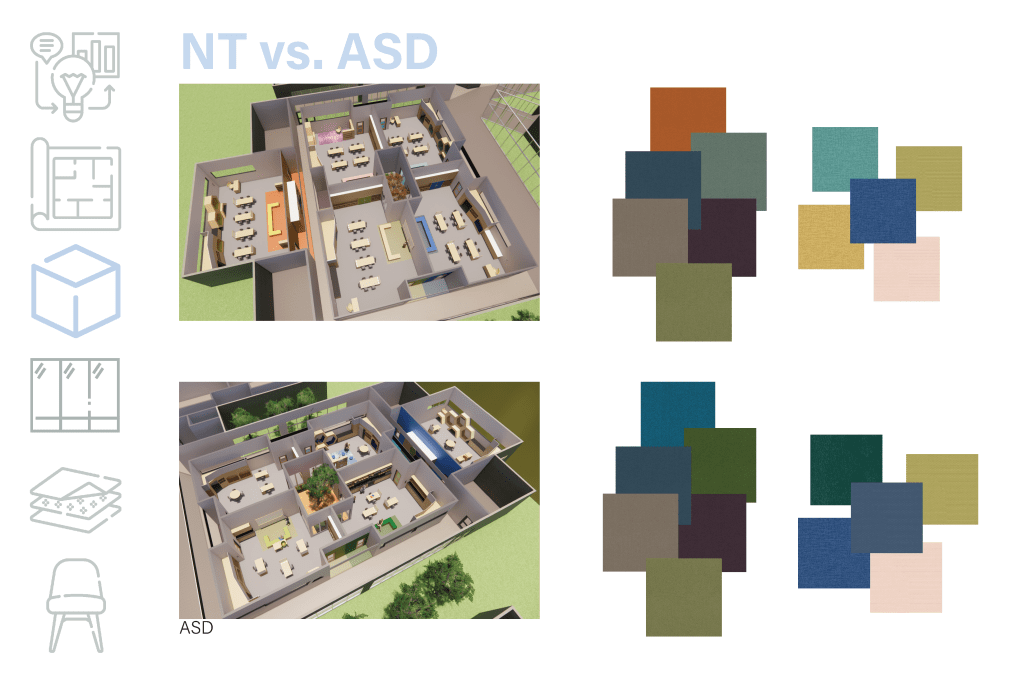
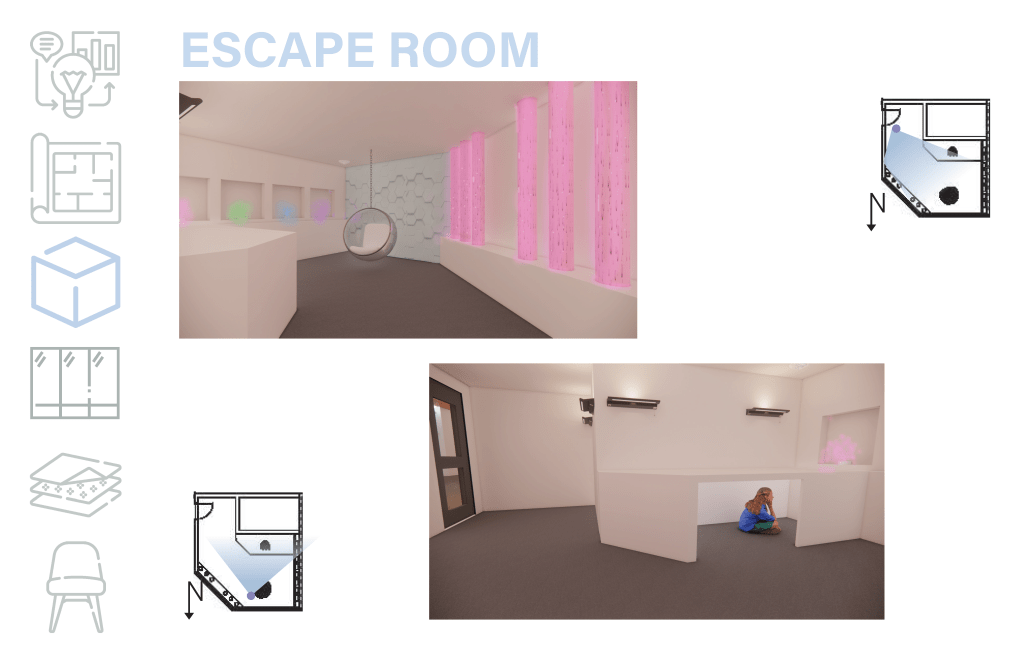
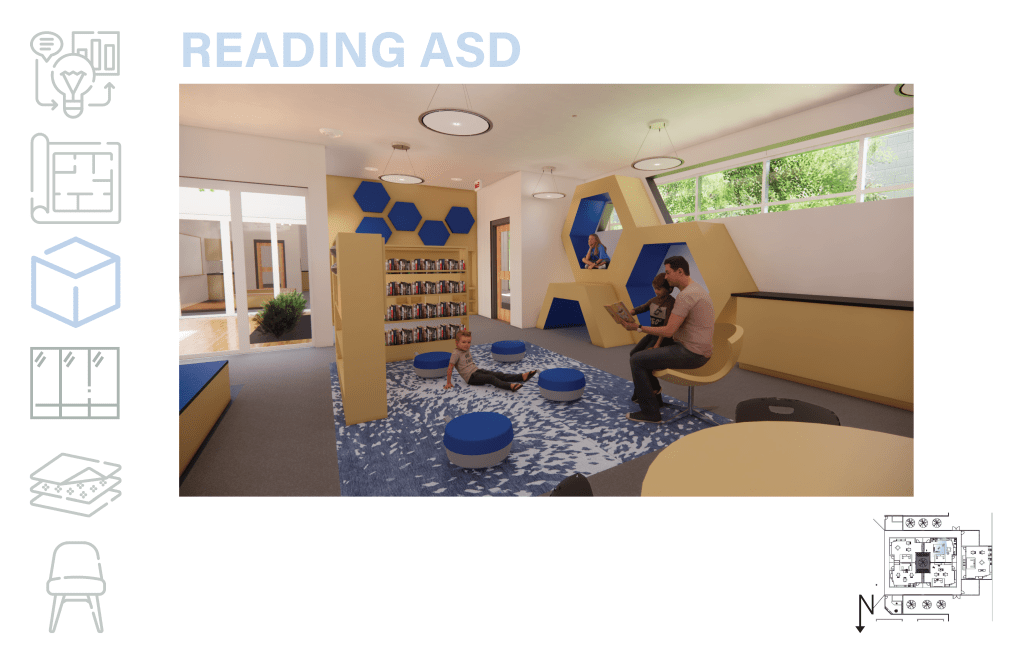
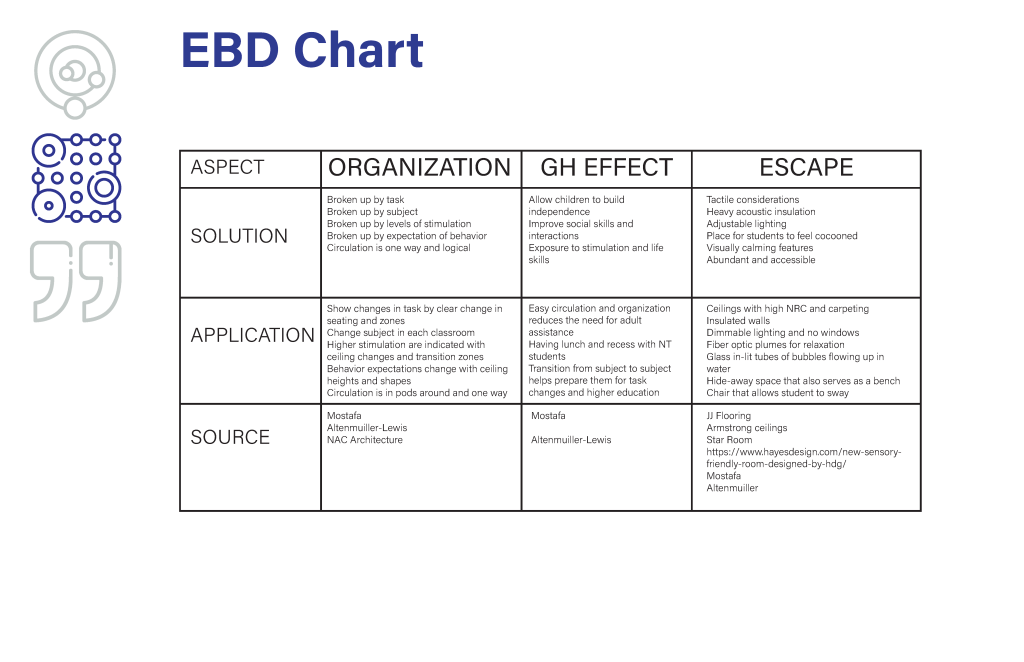
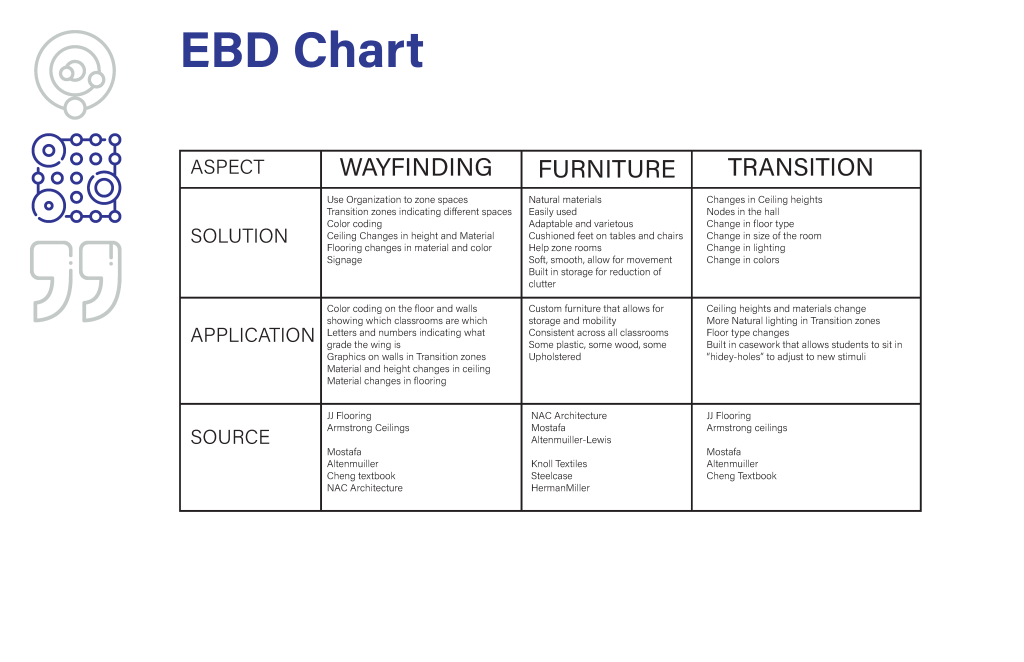
This project was open to our discretion on what we wanted to focus on. We were instructed to choose a research subject in regards to interior design and write a paper on our extensive research and what we would like to explore further. This project was focused on teaching us to make evidence-based design decisions. We were not given a building or location, so everything was open to us to decide. If we were designing a large space, we were told by our professors that we were to narrow down the areas we wanted to focus on. I had to narrow down to 6 areas or aspects.
Abstract
My topic was Designing Academic Environments for Autistic and Neurotypical Needs Alike.
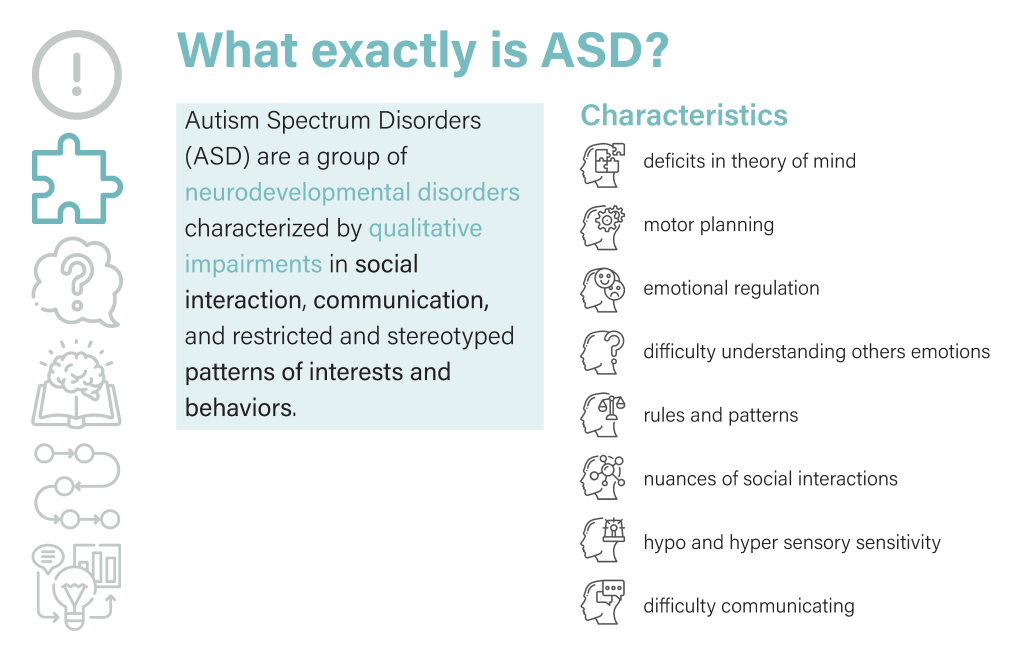
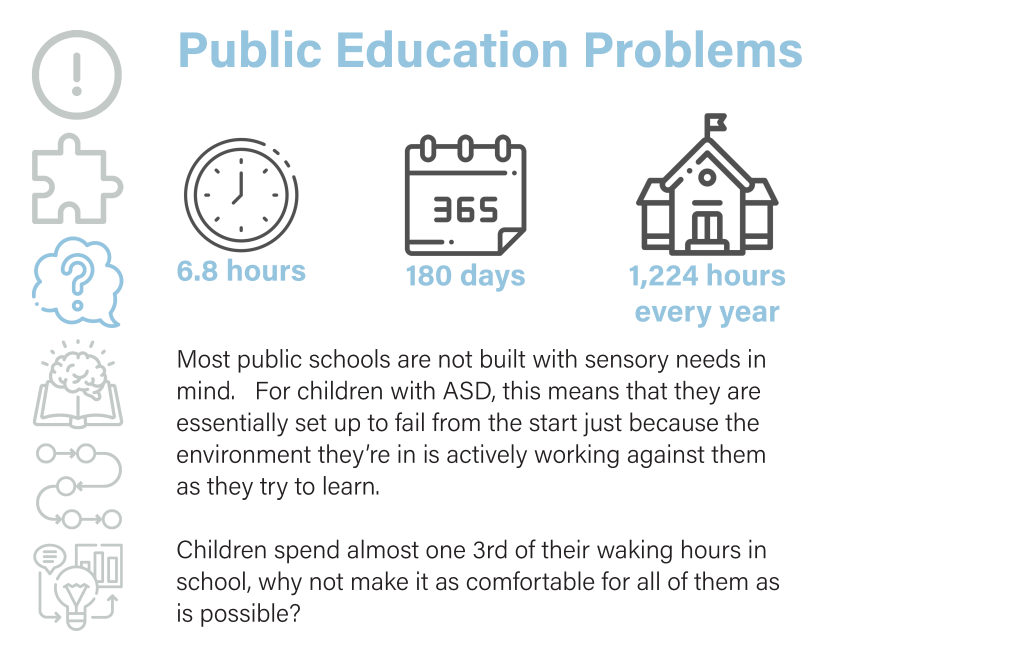
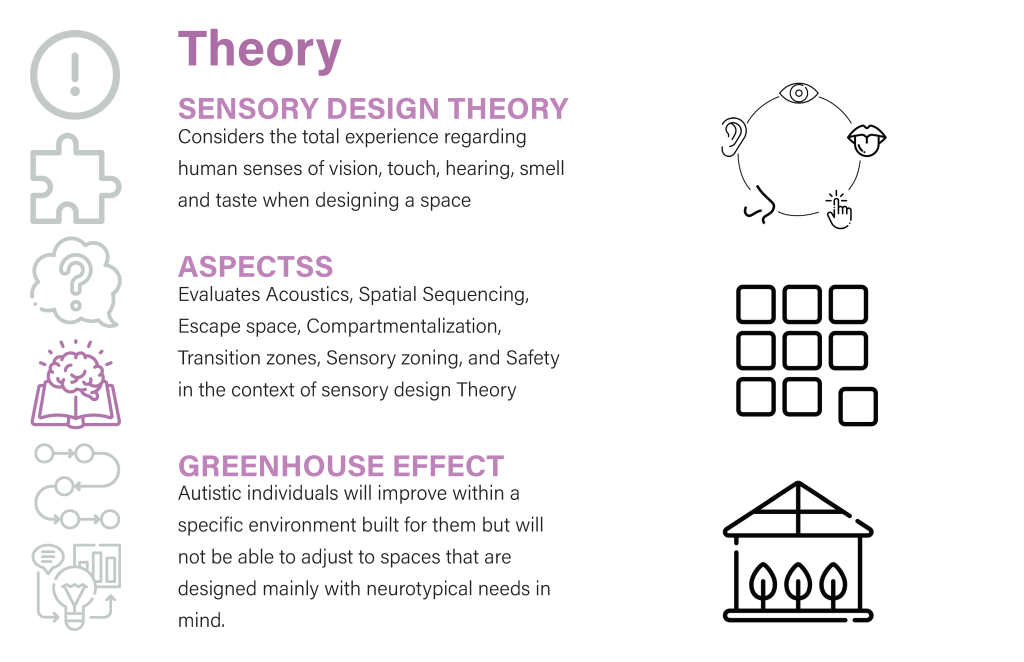
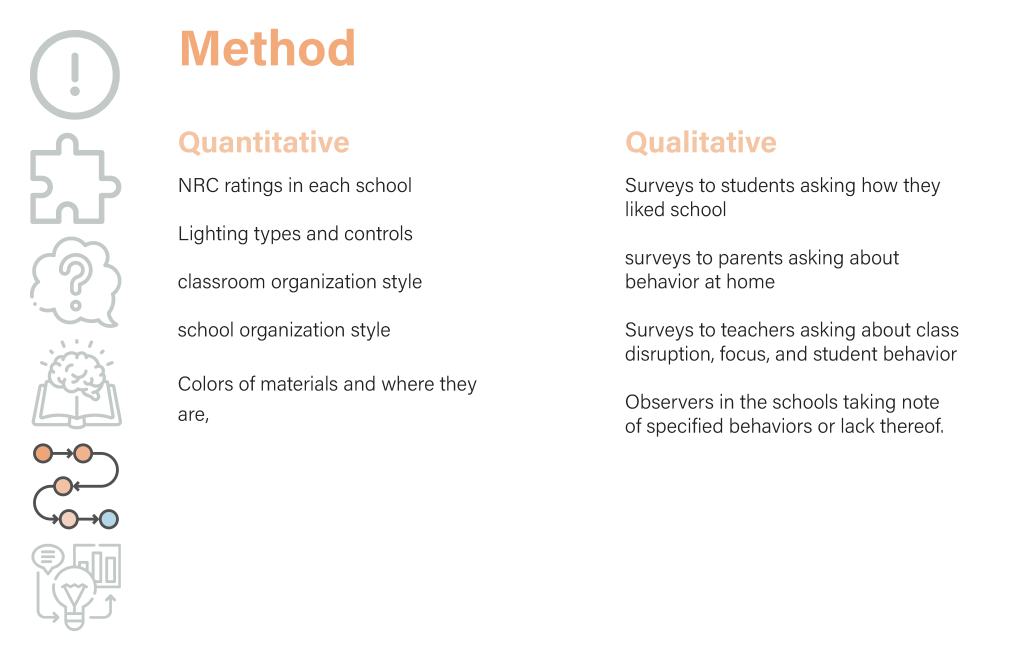
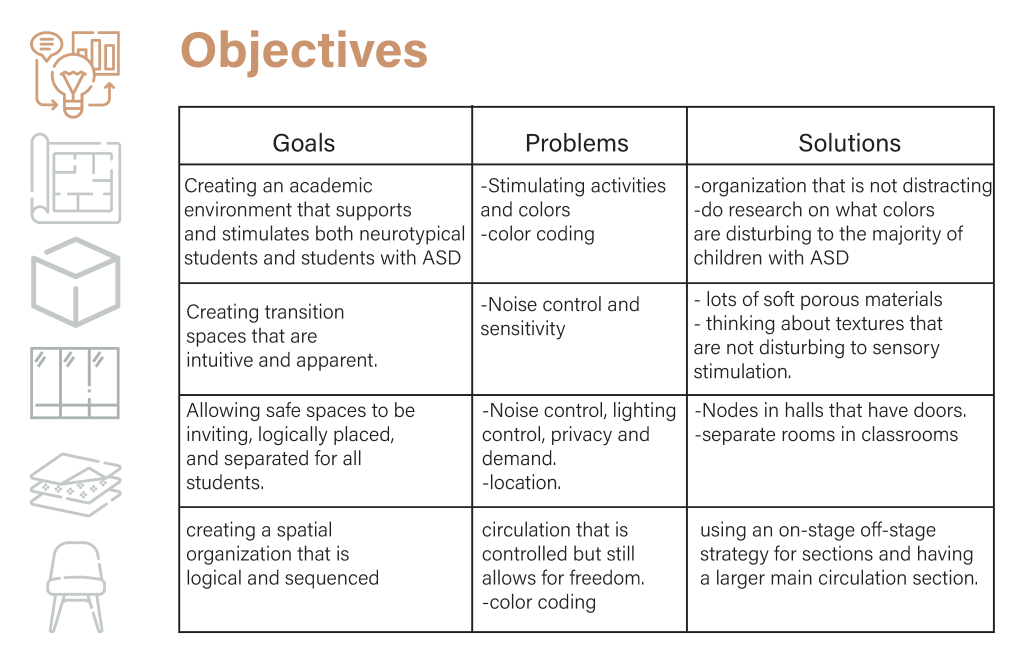
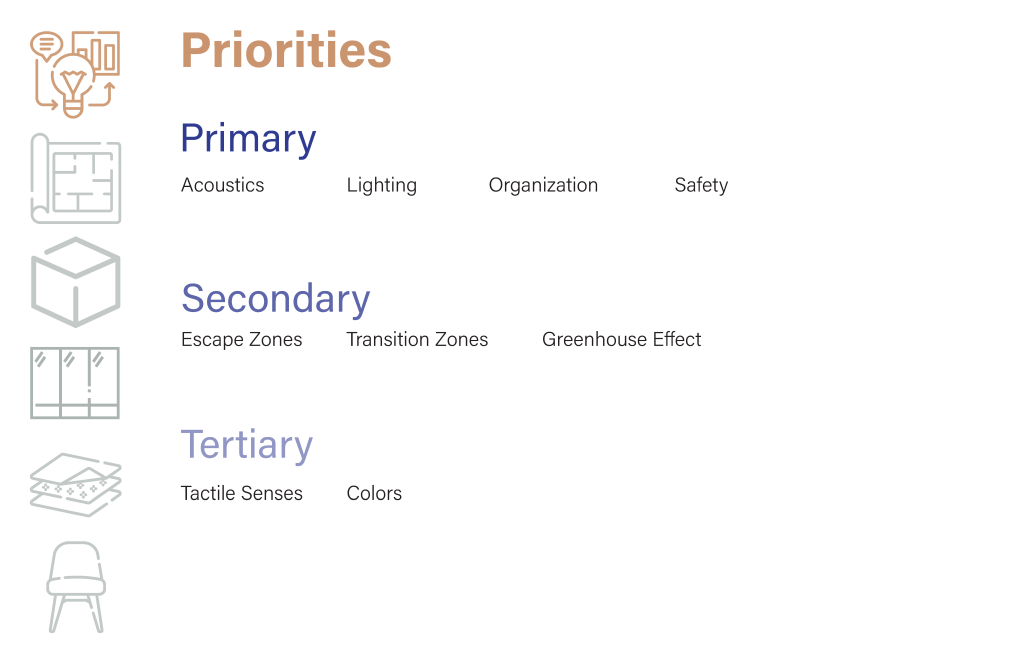
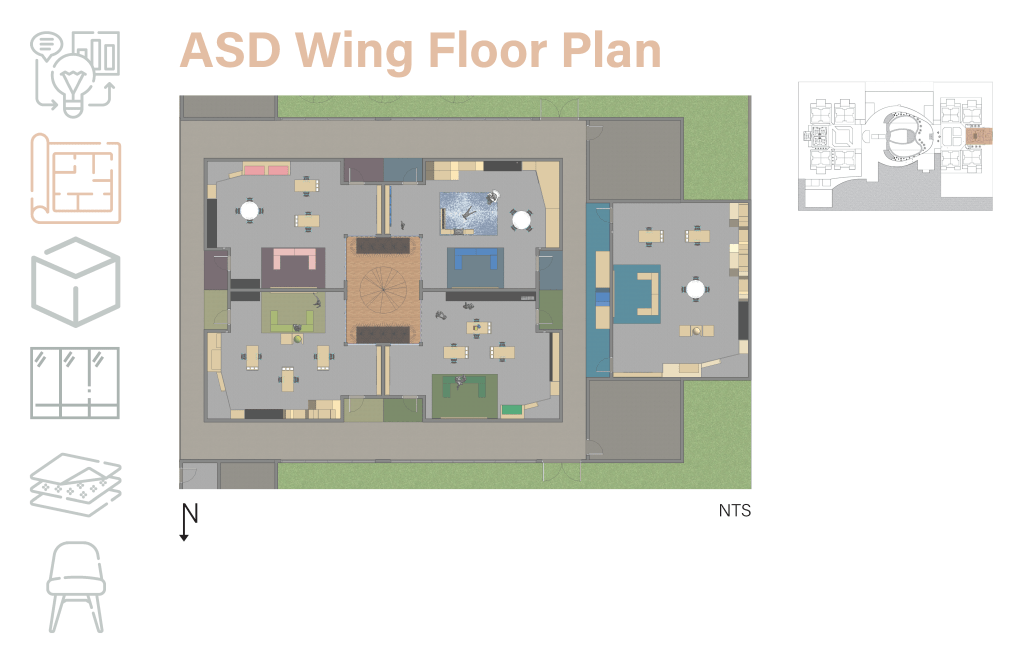
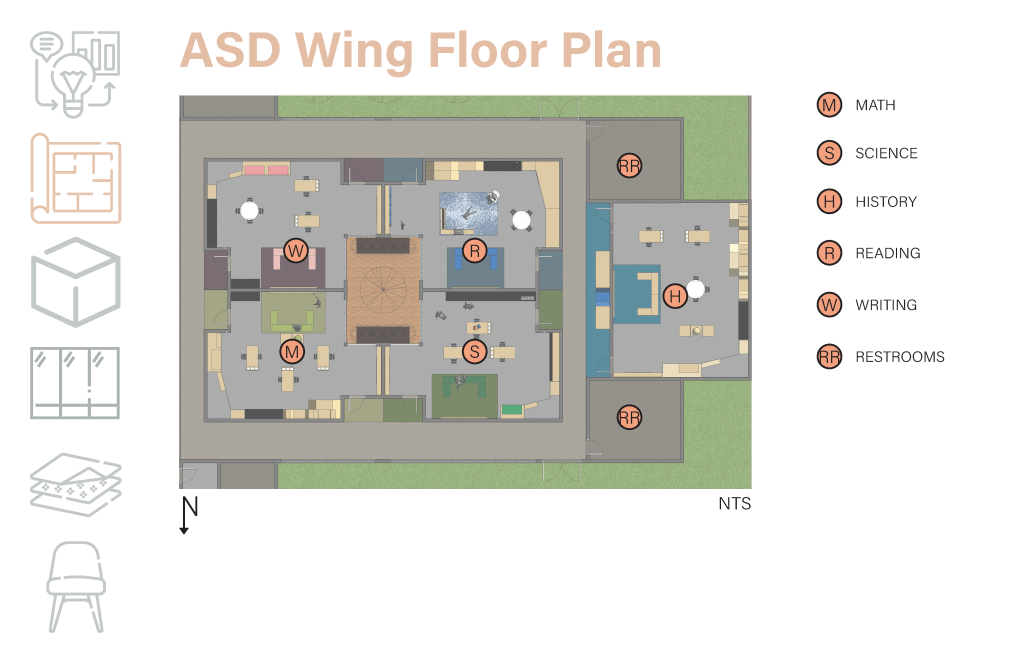
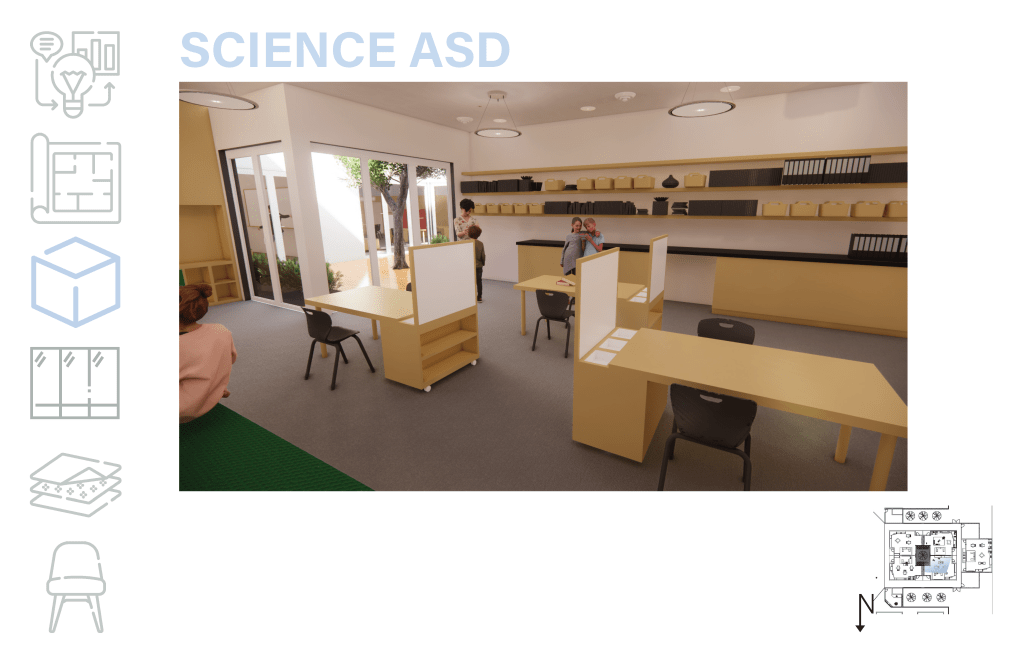
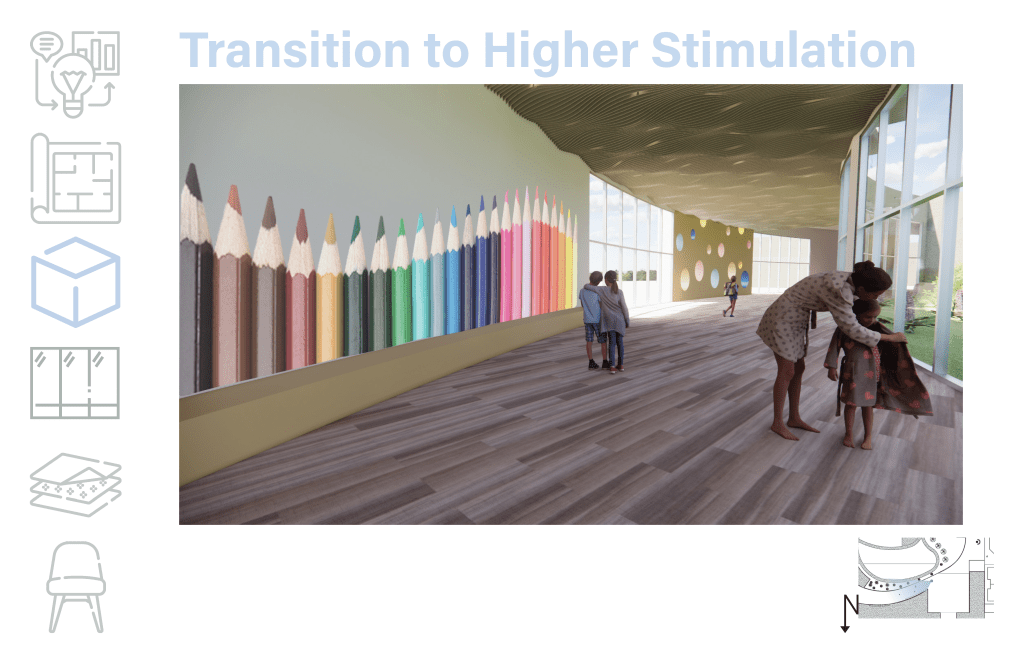
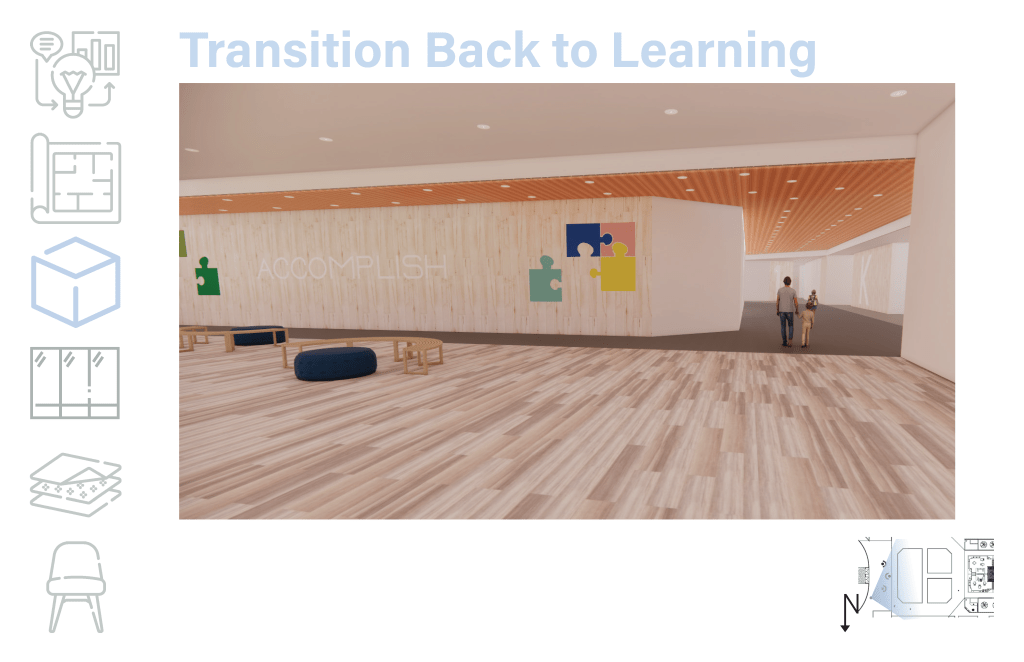
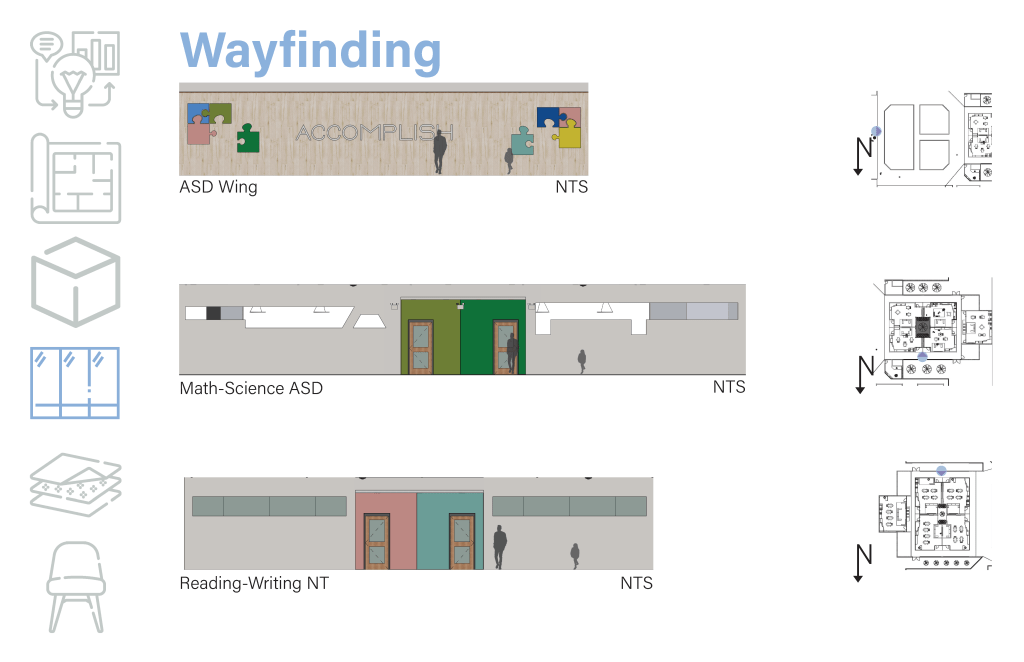
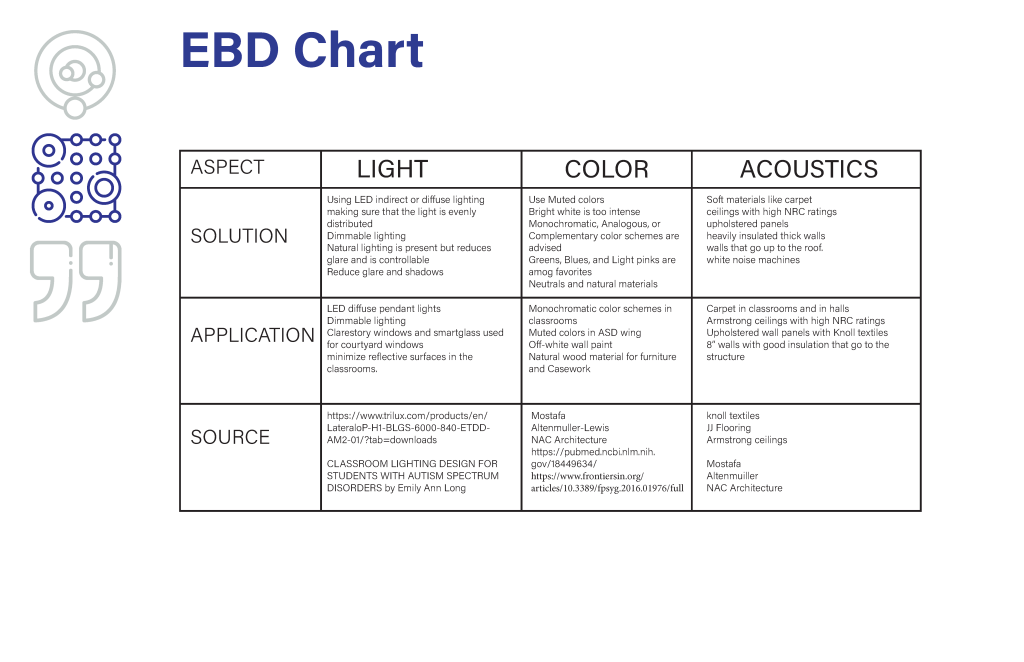
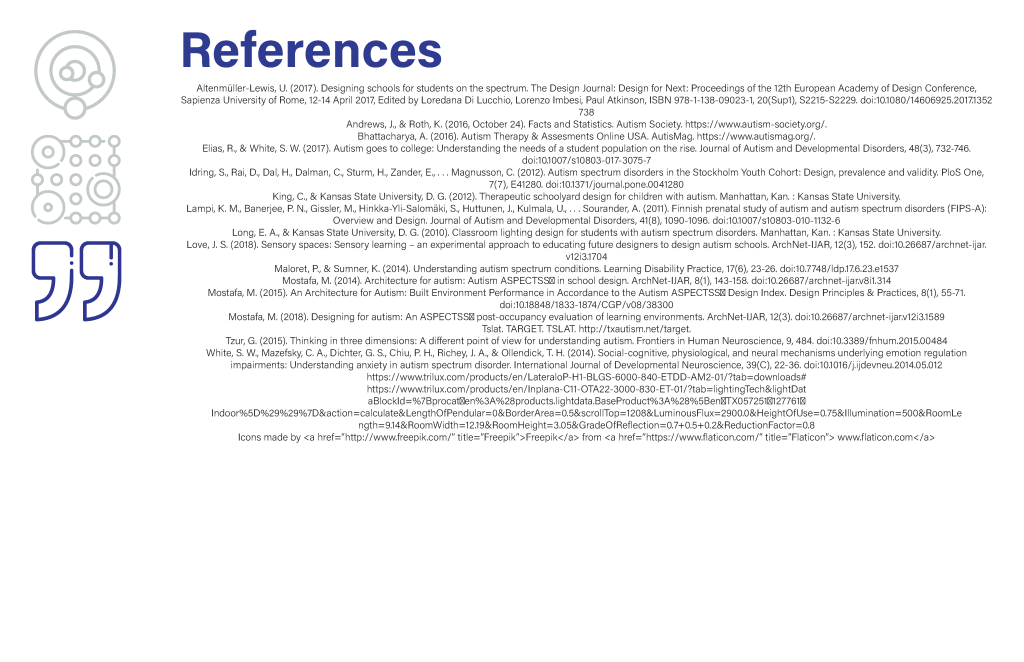
Autism is the largest growing disability in America. Currently, the ratio of Autistic individuals in the world is about 1% of the population, however in the US the prevalence of Autism among births is around 1 in 54. In 2014, there was an estimated 3.5 million Americans living with Autism, and the prevalence of autism in U.S. children increased by 119.4 percent from 2000 to 2010 (Andrews, 2016). Characteristics of Autism Spectrum Disorder (ASD) include deficits in theory of mind, motor planning, emotional regulation, difficulty understanding others emotions, strict adherence to rules and patterns, inability to understand the nuances of social interactions, hypo and hyper sensory sensitivity, and difficulty communicating with others (Tzur, 2015). By recognizing the scope and significance of ASD society can take a closer look at how it can create a world where these children can grow up knowing that they are safe, included, and equal. This paper will delve into the different sensory needs that are to be considered when designing for individuals with ASD, specifically within academic environments. Using the Sensory Design Theory, which considers the total experience regarding human senses of vision, touch, hearing, smell and taste when designing a space, and Mostafa’s ASPECTSS guidelines, this paper propose evidence-based solutions for academic environments that are safe and effective for students of all abilities (Spacey, 2017). Since current research on how to design for the needs of those with ASD is limited, this paper will also propose some new research through post-occupancy evaluations, quantitative testing of new built environments physical attributes such as acoustics and lighting, and qualitative surveys for the students, parents, and teachers using the new school. The objective is to demonstrate that there are ways to design public schools for all kinds of sensory needs without isolating children from their peers. Theoretically, and hopefully soon be proven, this kind of solution will not only benefit children with ASD, but also those with other kinds of neurodiversity, and neurotypical students alike.
Presentation Slides


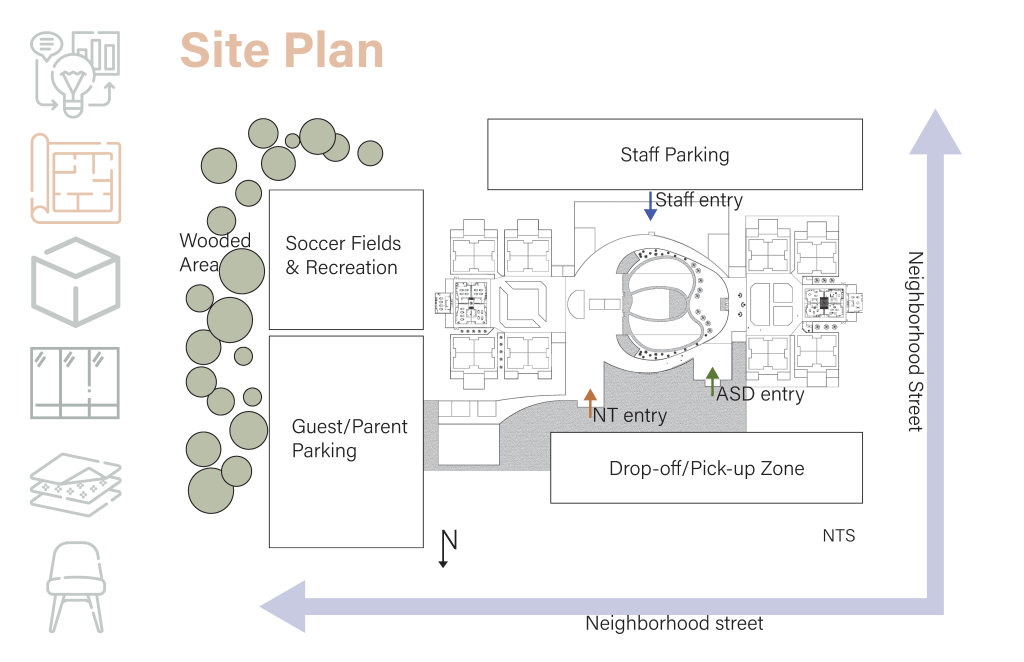
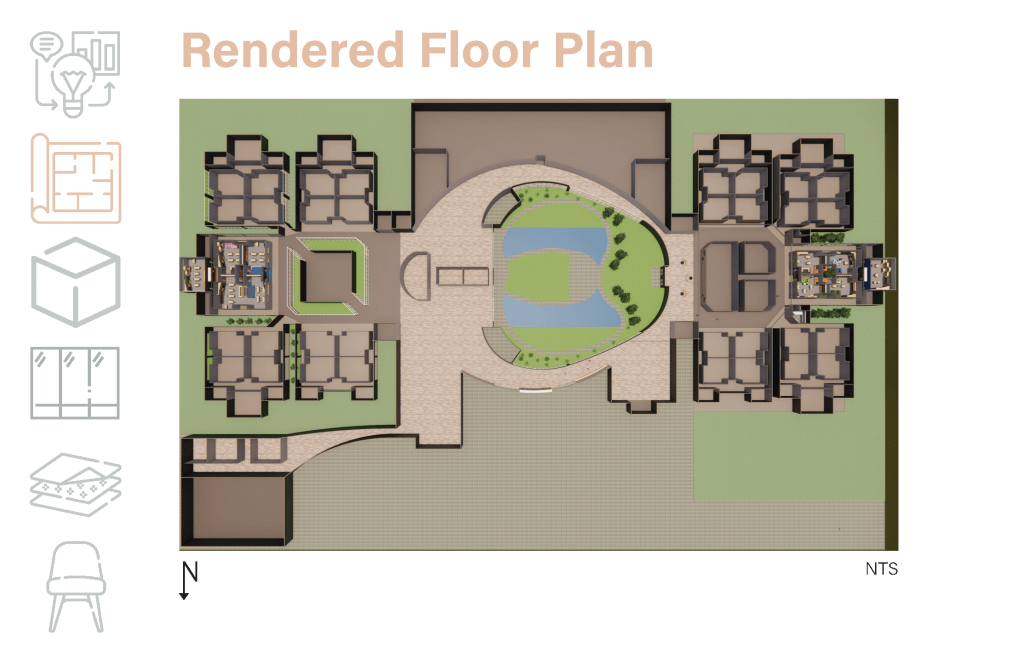
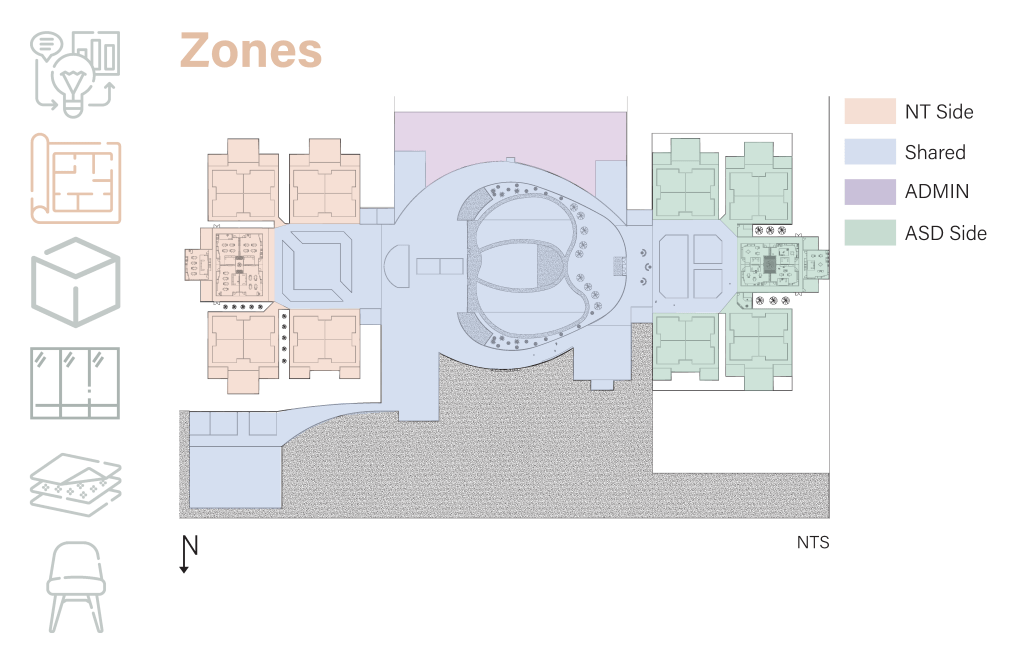
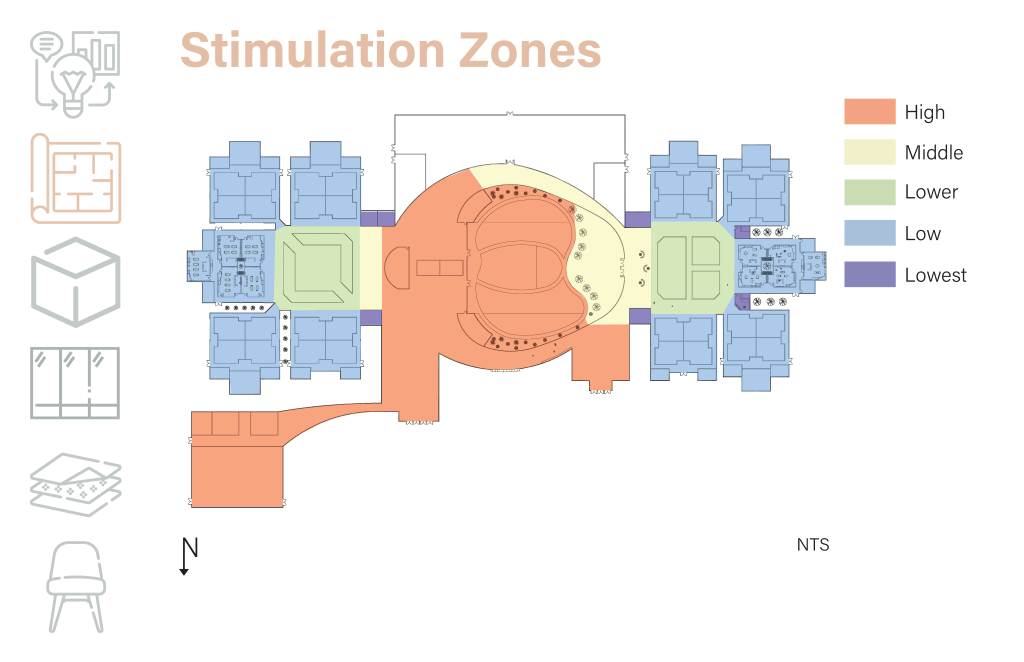





Full Submission
To see the project in more detail, click the link below!
Process Work
Here is some of my process work on Mural

